Imagine building a magnificent sandcastle on the beach, only to have it washed away by the waves. That’s what running a small business without insurance can feel like. Vulnerable, exposed, and at the mercy of unforeseen circumstances. But fear not, securing the right insurance policies can provide a sturdy shield that ensures your business thrives even when challenges arise.
In this ever-evolving marketplace, where unpredictability is the only certainty, having the right insurance isn’t just a smart move—it’s a lifeline. From protecting your assets to ensuring peace of mind, let’s dive into the essential insurance policies every small business needs to safeguard its future and bolster its resilience against the unexpected.
Importance of Small Business Insurance
Running a small business is no small feat, and ensuring its protection is crucial. Small business insurance acts as a safety net, safeguarding your venture from unforeseen calamities.
Without adequate insurance, the dreams you’ve built could be at risk of unraveling with a single unexpected event. Insurance isn’t just a precaution; it’s a strategic tool that empowers you to face uncertainties with resilience.
Why Small Businesses Need Insurance Coverage
Small businesses are the backbone of our economy, yet they can be surprisingly vulnerable. Insurance coverage is essential for protecting your assets, employees, and ultimately, your livelihood from potential threats and disruptions. Here’s why:
“Insurance is not just a policy; it’s a promise to keep your business dreams alive.”
- Protection against natural disasters like floods or fires
- Coverage for liabilities such as customer injuries
- Security for intellectual property and data breaches
- Mitigation of risks from employee-related incidents
Potential Risks Insurance Can Mitigate
Small businesses face numerous risks that can have severe ramifications if left unprotected. Understanding these risks can help you choose the right insurance policies.
| Types of Risks | Insurance Needed | Potential Costs Without Insurance |
|---|---|---|
| Natural Disasters (e.g., hurricanes, floods) | Property Insurance | $50,000 – $100,000 in damages |
| Customer Injuries | General Liability Insurance | $20,000 per claim |
| Data Breaches | Cyber Liability Insurance | $200,000 in recovery costs |
| Employee Injuries | Workers’ Compensation Insurance | Up to $50,000 per incident |
The Financial Impact of Not Having Proper Insurance
Skipping out on insurance might seem like a way to cut costs, but it could lead to financial devastation. Without the right coverage, one mishap can drain your resources and threaten your business’s survival.
Consider this: Unexpected financial hits can stall your operations, damage your reputation, and even result in legal battles. It’s a gamble that few businesses can afford.
“Foregoing insurance today could mean forfeiting your business tomorrow.”
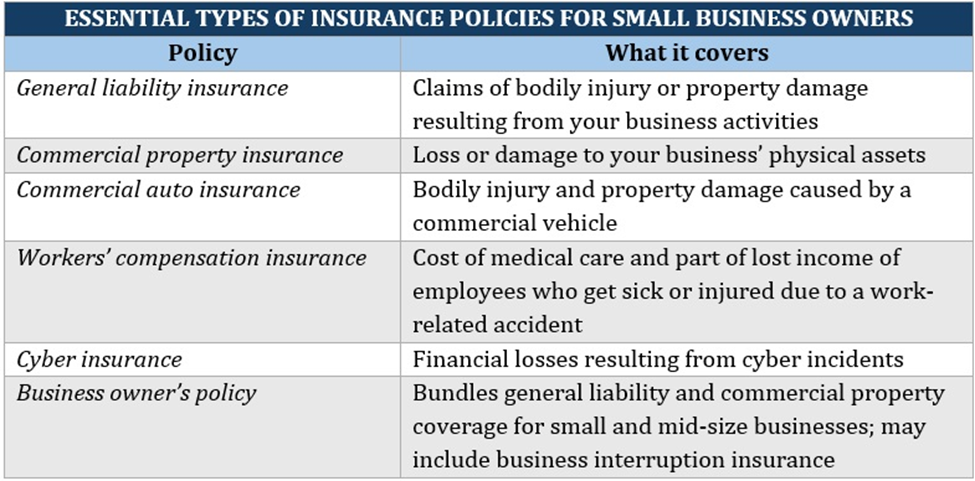
Types of Essential Insurance Policies
Insurance is often the unsung hero of small business security, standing guard as you pursue your entrepreneurial dreams. Let’s explore the key insurance policies that can safeguard your business against unforeseen challenges.
Understanding the essentials of business insurance is crucial as it provides you with a safety net, allowing you to focus on growth and innovation without the constant worry of unexpected setbacks. Here, we delve into the most vital types of insurance that every small business should consider.
General Liability Insurance: A Must-Have Shield
Every business, no matter how small, faces potential risks. General Liability Insurance is a fundamental policy that protects your business from claims of bodily injury, property damage, and personal injury. It covers the costs of your legal defense and any settlements or judgments, ensuring that a single mishap doesn’t derail your business endeavors.
Property Insurance: Safeguarding Your Assets
Your business is built on physical assets – and Property Insurance ensures they’re covered. Whether it’s a fire, theft, or natural disaster, this policy helps you recover by covering the loss or damage to your business property. Protect your office space, equipment, inventory, and more with the right coverage.
Workers’ Compensation Insurance: Employee Protection
For businesses with employees, Workers’ Compensation Insurance is not just essential; it’s often legally required. This insurance covers medical expenses and lost wages for employees who get injured or fall ill due to work-related activities. It demonstrates your commitment to your employees’ well-being and protects your business from potential lawsuits.
Professional Liability Insurance: Covering Errors and Omissions
If your business provides professional services or advice, Professional Liability Insurance (also known as Errors and Omissions Insurance) is crucial. It protects you against claims of negligence, mistakes, or failure to deliver services as promised. This policy can save you from costly legal battles that could arise from dissatisfied clients.
Business Interruption Insurance: Ensuring Continuity
When disaster strikes, continuity can mean the difference between overcoming adversity and closing your doors. Business Interruption Insurance covers lost income and operating expenses if your business is forced to close temporarily due to a covered event. It helps you stay afloat during challenging times, keeping your financial health intact.
| Insurance Type | Coverage Details | Cost Implications | Business Suitability |
|---|---|---|---|
| General Liability Insurance | Covers bodily injury, property damage, personal injury | Varies based on coverage limits and business size | All businesses, especially customer-facing ones |
| Property Insurance | Covers damage to business property and assets | Depends on property value and location | Businesses with physical locations or significant assets |
| Workers’ Compensation Insurance | Covers employee injuries and illnesses related to work | Mandatory in most states; cost varies by payroll and risk | Businesses with employees |
| Professional Liability Insurance | Covers negligence and service-related errors | Premiums based on industry risk and coverage limits | Service providers, consultants, and advisors |
| Business Interruption Insurance | Covers lost income and operating expenses during closures | Additional to property insurance; cost varies | Businesses vulnerable to natural disasters or other disruptions |
General Liability Insurance
Imagine running your small business without a safety net—every misstep could lead to financial chaos. Enter General Liability Insurance, your trusted ally in safeguarding against unexpected liabilities.
This policy acts as a shield, protecting your business from the financial burden of claims involving bodily injuries or property damage that may arise during your operations.
Coverage and Claims
General liability insurance covers a range of potential incidents that could occur at your business. This includes third-party bodily injuries, property damage, personal injuries, and even advertising injuries. For example, if a customer slips and falls inside your store or if an employee accidentally damages a client’s property, general liability insurance steps in to cover medical expenses or repair costs.
Real-World Relevance
Consider the case of a small bakery owner who faced a lawsuit after a customer slipped on a wet floor. The legal fees and settlement costs could have financially crippled the business, but thanks to their General Liability Insurance, they were covered. Statistics reveal that 40% of small businesses will likely experience a property or general liability claim within the next decade, highlighting the crucial importance of such coverage.
General Liability Insurance is not just a policy; it’s a strategic safeguard, turning potential financial disasters into manageable challenges.
Professional Liability Insurance
Professional liability insurance is a critical shield for businesses that provide specialized services. It becomes the unsung hero when expertise turns into unexpected pitfalls.
This insurance primarily caters to those whose work involves delivering professional advice or services, as it provides a safety net against negligence claims that could otherwise financially cripple a business.
Who Needs Professional Liability Insurance?
Businesses across various fields, from healthcare to finance, often require professional liability insurance. Professionals such as consultants, attorneys, and architects are especially vulnerable to claims of negligence or misrepresentation. Even the most careful and competent professionals can face allegations that lead to costly legal battles.
This type of insurance covers the costs associated with defending against a lawsuit and any resulting judgments or settlements, ensuring that a business does not have to bear these expenses out of pocket.
Protection Against Negligence Claims
Professional liability insurance is designed to protect your business against claims of negligence or mistakes in the service you provide. For instance, if a consultant’s advice leads to a financial loss for a client, the client might file a lawsuit. This insurance covers legal defense costs and any financial damages awarded, up to the policy limit.
Without this protection, even a single claim could potentially bankrupt a small business.
How This Insurance Could Save a Business
Imagine an architect makes an error in their blueprints, leading to structural issues in a newly constructed building. The client sues the architect for damages. Without professional liability insurance, the architect might face insurmountable legal fees and settlement costs. However, with the right insurance policy, these costs can be covered, preserving the architect’s financial stability and reputation.
| Profession | Common Claims | Insurance Benefits | Case Study |
|---|---|---|---|
| Consultants | Misleading Advice | Covers legal fees and settlements | Advice led to client financial loss |
| Architects | Design Errors | Compensation for structural issues | Blueprint mistake caused building flaws |
| Healthcare Providers | Malpractice | Protects against legal claims | Incorrect treatment led to patient harm |
| Financial Advisors | Negligent Advice | Financial restitution for bad investment outcomes | Poor investment strategy caused client loss |
Commercial Property Insurance
Imagine the heart and soul of your business, the physical space where your dreams come alive. Commercial property insurance is your safety net, ensuring that your business’s physical assets are protected against the unexpected.
This insurance covers everything from buildings, equipment, furniture, to inventory—safeguarding what keeps your business running. It’s the guardian angel that stands between you and potential financial disaster caused by unforeseen incidents like fire, theft, or natural disasters.
Understanding What is Covered
Commercial property insurance encompasses a variety of scenarios to protect your business’s tangible assets. Whether it’s a small office or a large warehouse, this policy typically covers:
- Physical premises (owned or rented)
- Office equipment, computers, and technology
- Inventory and stock
- Furniture and fixtures
- Outdoor signs
Understanding precisely what is covered can be the difference between a minor setback and a major catastrophe.
Determining the Right Coverage Level
Finding the sweet spot for your coverage is crucial. Start by assessing your business’s unique needs and potential risks.
Consider not only the value of your physical assets but also the cost of potential business interruptions.
A licensed insurance advisor can help tailor a plan that fits like a glove.
Assessing the Value of Business Property
Accurate valuation is the foundation of any effective insurance strategy. Employ a comprehensive method to evaluate business property, including:
- Conducting a detailed inventory listing all assets.
- Evaluating replacement costs, not just market value.
- Considering depreciation for older items.
- Utilizing professional appraisers for high-value items.
By doing so, you ensure the coverage reflects the true worth of your business assets.
Checklist for Evaluating Property, Determining Coverage, and Calculating Premiums
Embarking on the journey of insuring your business property? Here’s a step-by-step checklist to guide you:
| Evaluating Property | Determining Coverage | Calculating Premiums |
|---|---|---|
| Create an inventory list | Analyze risk factors | Consider location and risk exposure |
| Determine replacement values | Consult with an insurance advisor | Review claims history |
| Incorporate depreciation | Include all assets | Factor in deductibles |
With these steps, you can confidently march toward securing the best commercial property insurance for your business, ensuring that you are prepared for whatever comes your way.
Workers’ Compensation Insurance
Dive into the realm of Workers’ Compensation Insurance, a crucial safety net that not only safeguards employees but also fortifies businesses against unforeseen mishaps. This insurance is more than a regulatory checkbox; it’s a symbol of a responsible enterprise.
Let’s unravel the layers of this policy, exploring how it functions as a lifeline for both employers and employees, ensuring a fair and secure workplace.
Legal Requirements by State
The legal landscape of workers’ compensation insurance varies across the United States, tailored to each state’s unique requirements. Understanding these mandates is essential for businesses to remain compliant and protect their workforce.
- California: Businesses with even one employee must provide workers’ compensation insurance.
- Texas: Unlike most states, workers’ compensation insurance is optional, but highly recommended.
- Florida: Companies with four or more employees, including business owners who are corporate officers or LLC members, must offer this insurance.
Each state has its nuances, so it’s crucial to consult local regulations to ensure full compliance and comprehensive coverage for your team.
Benefits for Employers and Employees
Workers’ compensation insurance is a win-win for both employers and employees. For employers, it shields against legal liability and hefty medical costs in the event of workplace injuries. Meanwhile, employees receive financial support and medical care, fostering a quicker recovery and return to work.
“Workers’ compensation is not just a policy but a promise of protection and peace of mind.”
Employers benefit from reduced legal battles, while employees gain access to necessary treatment and wage replacement, creating a harmonious work environment.
Filing a Workers’ Compensation Claim
Filing a claim might seem daunting, but with the right steps, it becomes a seamless process. Here’s how:
- Report the injury to your employer immediately.
- Seek appropriate medical treatment and document everything.
- Fill out the necessary workers’ compensation claim forms provided by your employer or state agency.
- Submit the completed forms to the appropriate authority, ensuring all documentation is in place.
- Follow up regularly on the claim status and adhere to any additional requests for information.
This structured approach ensures timely and effective processing of claims, facilitating smooth recoveries and minimizing disruptions.
Statistics on Workplace Injuries and Insurance Support
Workplace injuries are more common than one might think, and having the right insurance is crucial to managing these incidents.
| Injury Type | Percentage of Incidents |
|---|---|
| Overexertion | 33% |
| Slips, trips, and falls | 27% |
| Contact with objects | 22% |
These statistics highlight the prevalence of certain injuries, emphasizing the need for robust insurance policies to support recovery and maintain business continuity. Workers’ compensation insurance is the unsung hero that ensures injured workers receive the care they need, paving the way for their return to productivity.
Summary
In the grand tapestry of entrepreneurship, insurance policies are the threads that hold your business together against the winds of fate. By embracing the right coverage, you not only protect your investment but also empower your business to grow with confidence. So, as you chart the future of your company, remember that safeguarding it with the proper insurance is an investment in its longevity and success. Here’s to a future where your business not only survives but thrives!

